

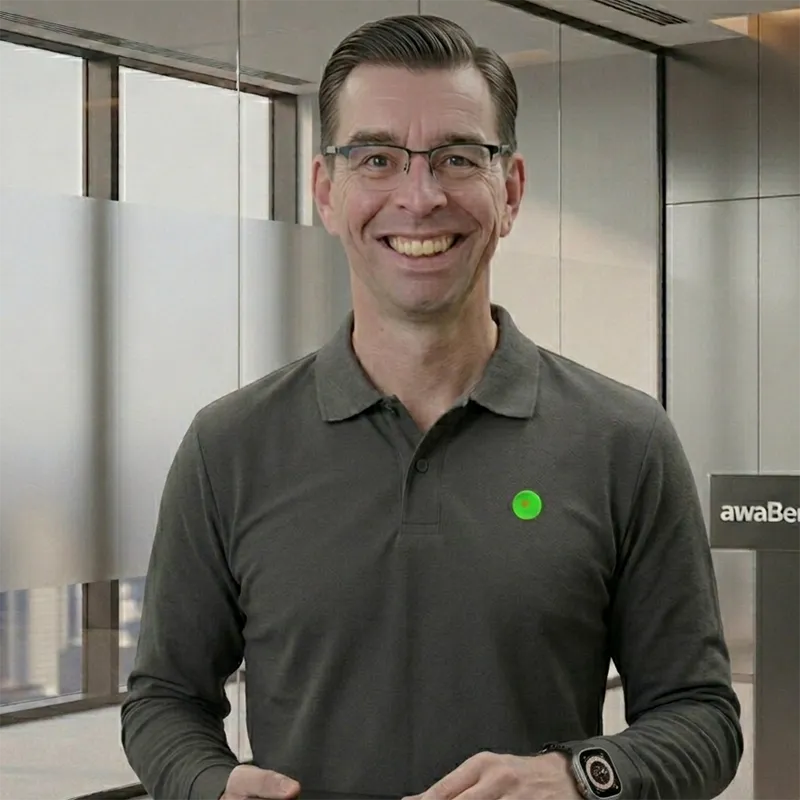
I founded awaBerry because I had lived the pain I was trying to solve. More than a decade of pioneering work in secure connectivity — including patented innovations in hospital network access — taught me two things: the devices that matter most to an organisation are almost never the ones that are easiest to reach, and the security measures designed to protect them too often make them impossible to work with. Something had to change.
In 2024 I decided to build the platform I had always wished existed. Today, awaBerry gives teams of every size the ability to connect, access, and automate their devices from anywhere in the world — without opening firewall ports, without VPNs, and without the configuration complexity that used to require a full-time specialist just to manage.
But this blog is not really about how awaBerry came to exist. It is about what we are going to use it for — and what it makes possible.
Why We Are Starting a Blog Now
We have reached a point where the product is real, customers are using it in ways we find genuinely exciting, and we have things to say about the problems we are solving. It felt like exactly the right moment to open a window into what we are building and how we think about it.
The team here — Rita, Harald, Naomi, and I — come from very different backgrounds. Rita has spent her career bringing technology to the organisations that need it most. Harald is one of the sharpest minds in AI and scalable system design I have ever worked with. Naomi leads our security and privacy strategy with a depth of expertise that frankly shaped the entire architecture of awaBerry from day one. We all have perspectives worth sharing. This blog is where we will do that.
What We Will Write About
Our promise is simple: write about things that are actually useful to the people building, securing, and managing modern device infrastructure. That means:
- Real use cases — from 12-year-old makers setting up their first SoC device without a keyboard, to pharmaceutical researchers aggregating patient data across international hospitals using AI agents.
- Security thinking — zero-trust architecture is not a marketing phrase here. Naomi will be writing about what it actually means to embed zero-trust principles into every layer of a platform, from cryptographic protocol design through to compliance frameworks.
- Developer and DevOps perspectives — Harald will share how the Agentic API and Smart Automation Framework enable CI/CD pipelines that reach all the way to embedded devices in manufacturing environments.
- The agentic future — AI workflows increasingly need to act in the physical world. We will write about what that means and how we are building for it.
A Quick Look at What We Have Built
For readers who are new to awaBerry, here is the shape of the platform:
awaBerry Anywhere is the connectivity layer. Connect brings any device — a cloud server, a Windows laptop, a Linux machine, a Raspberry Pi, or any other System-on-a-Chip board — into your awaBerry ecosystem in minutes, without touching your firewall and without configuring a VPN. Remote gives you every access method you need once a device is connected: Remote Desktop (VNC and RDP), SSH terminal, file browser, Web-to-Local port forwarding, and device monitoring — all through your browser or a native client, with zero-trust security as the foundation.
awaBerry Device Automation takes connectivity and turns it into intelligence. The Smart Automation Framework lets you describe a task in plain English and have a locally-executing script generated and deployed to your device — AI tokens spent once at creation time, zero tokens consumed at runtime. The Agentic API provides the programmatic trigger layer: scoped API keys, granular permissions, and full audit trails that let AI agents, scripts, and CI pipelines interact with your devices securely and precisely.
Together, these four capabilities — Connect, Remote, Smart Automation, and the Agentic API — form a complete platform for the AI age of device management.
The Road Ahead
In the weeks ahead, you will hear from Rita about how awaBerry is transforming headless device setup and remote work. You will hear from Naomi about why zero-trust is not optional in 2026 and how we have implemented it. You will hear from Harald about building for agentic workflows and CI/CD pipelines. And you will hear real stories from the people using awaBerry to do remarkable things with devices that used to require a lot more effort to reach.
We are glad you are here. Explore the full awaBerry platform →